• High-performance computing using OpenMP

    TU Delft Library Prometheusplein 1, Delft, Netherlands

    In this course you will learn to harness the computational power of modern multi-core CPUs for your daily scientific computations. OpenMP is a broad standard for shared-memory computing supported by all major compilers. We will cover the most important programming constructs, some correctness and performance bugs, and how to make a realistic assessment of performance....

  • EESSI webinar series (May-June 2025)

    Online

    What if you no longer have to install a broad range of scientific software from scratch on every laptop, HPC cluster, or cloud instance you use or maintain, without compromising on performance? The European Environment for Scientific Software Installations (EESSI, https://eessi.io) comes to the rescue! In this webinar series we will provide a comprehensive overview...

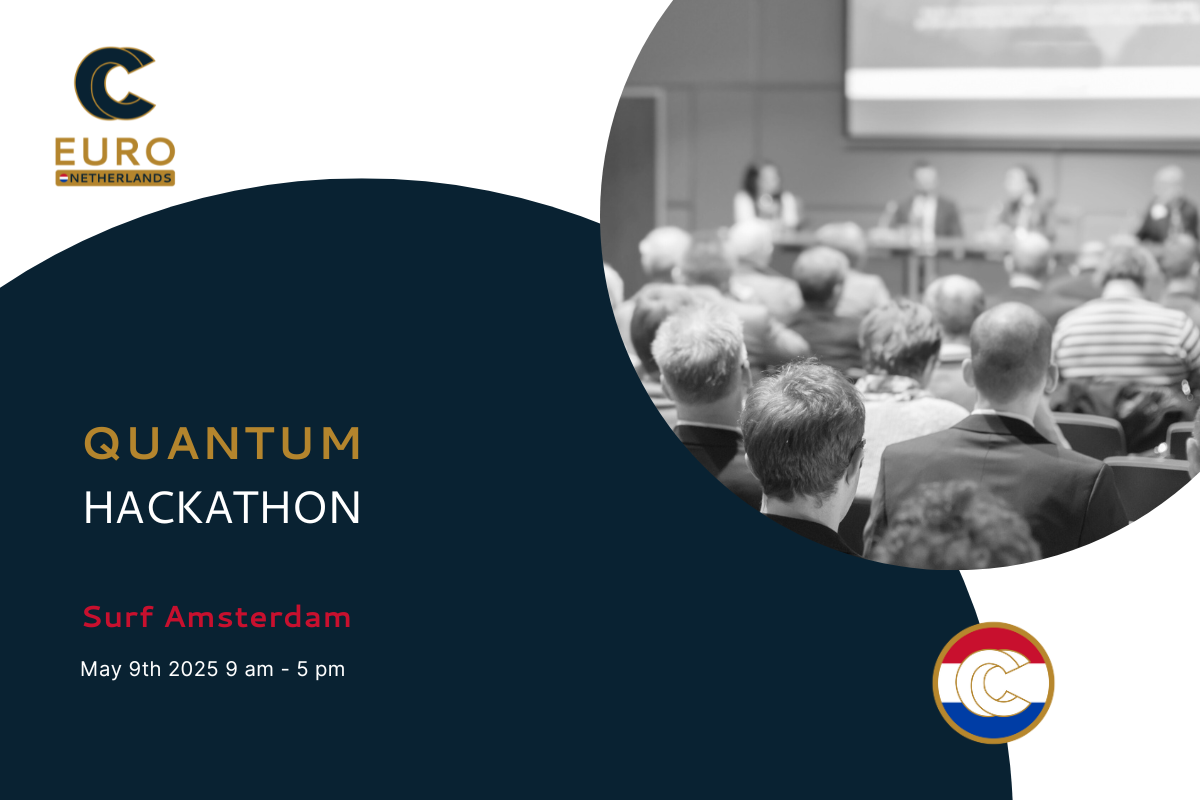
  • Quantum Hackathon

    SURF Amsterdam Science Park 140, Amsterdam, Netherlands

    Are you a developer, researcher or an enthusiast with an interest in cybersecurity and quantum technology? Join the QCIned Hackathon and build your own quantum-safe application on SURF’s Quantum Key Distribution (QKD) testbed. During this exciting challenge, you will build quantum-safe applications or systems leveraging quantum-safe cryptography using SURF’s quantum key distribution (QKD) testbed and...

  • HPC Spring School @ Utrecht University

    Utrecht University Heidelberglaan 3, Utrecht, Netherlands

    Are you ready to boost your skills in scientific computation, parallel programming, and deep learning? Then please take part in the HPC Spring School at Utrecht University! During this Spring School, experts from the UU and SURF offer a wide range of sessions spread over eight days. The HPC Spring School will take place from...

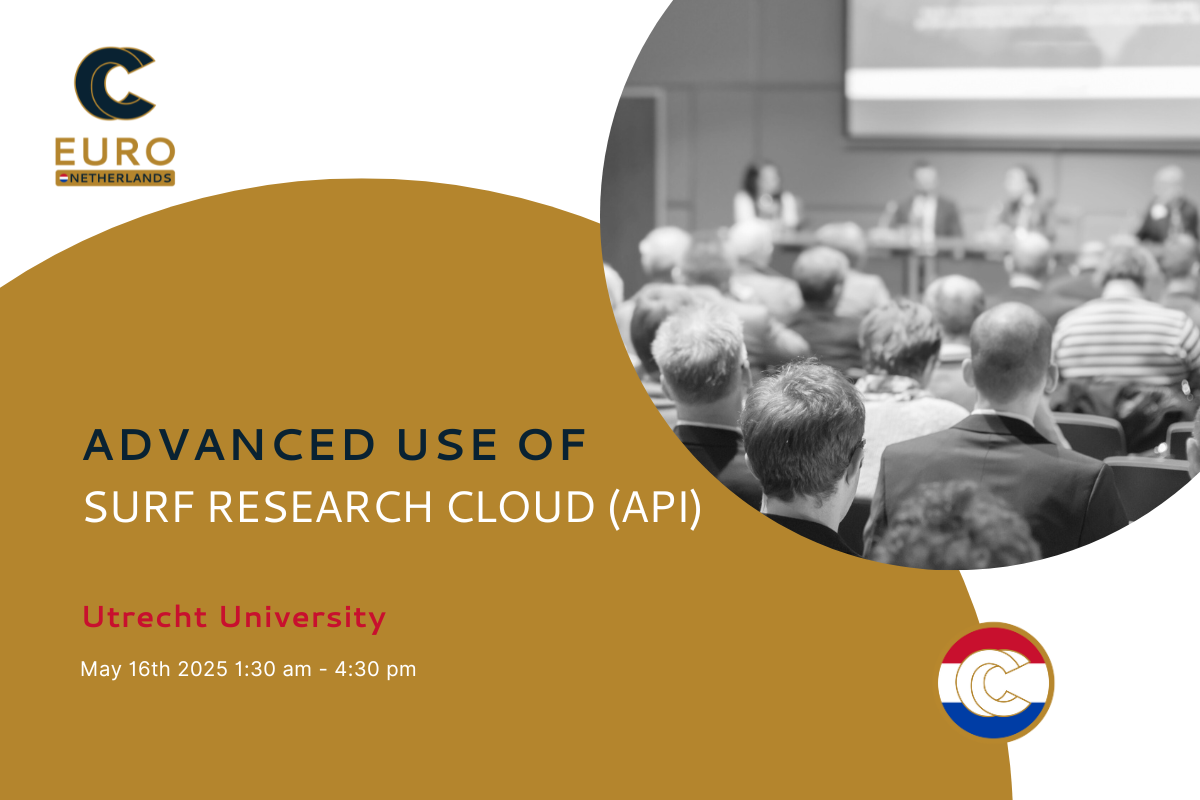
  • Advanced Use of SURF Research Cloud (API)

    Utrecht University Heidelberglaan 3, Utrecht, Netherlands

    Do you want to automate your SURF Research Cloud workflows using the API? Join this training to learn how to use the API to prepare environments for a group of users, control workspaces, and connect services. This is a follow-up to the Introduction to SURF Research Cloud training. For whom? This course is designed for researchers...

  • Moving your AI training jobs to LUMI: A Hands-On Workshop

    Join our two-day workshop, “Getting Started with AI on LUMI,” designed to familiarize you with the capabilities of the LUMI supercomputer for artificial intelligence applications. This workshop is ideal for those looking to transition from smaller-scale computing environments like laptops, workstations, or cloud VMs to the robust, GPU-intensive LUMI platform. Participants are invited to bring...

  • Introduction to Supercomputing, part I

    Amsterdam Science Park Science Park 904, Amsterdam, Netherlands

    If you need to perform many calculations or analyses that are too big for your own system, clusters and supercomputers offer the computing power you need. In this course, you will learn how to work with these large computing systems. What will you learn in this training? In this training course you will: understand what...

  • Machine learning using PyTorch on DelftBlue

    TU Delft Library Prometheusplein 1, Delft, Netherlands

    This course introduces machine learning on the DelftBlue supercomputer, blending theory with hands-on practice. Participants will learn to manage dependencies, handle large datasets, optimize GPU performance, and scale deep learning models using PyTorch. At the end of the day, you should be able to - Understand the basic setup of a supercomputer and identify bottlenecks...

  • Introduction to Deep Learning

    Amsterdam Science Park Science Park 904, Amsterdam, Netherlands

    Would you like to learn the theoretical and practical basics about Deep Learning? In the course, you'll learn how deep neural networks work and how they are optimised. During our hands-on sessions you will have the opportunity to work on our high-performance systems and train neural networks to solve an image classification problem. We'll cover...